在Hiro Clinic,我们推荐Natural Pro FUE治疗,该治疗可以治疗口服治疗或注射治疗无效的无毛部位,并且几乎不会留下明显的疤痕。 通过从后脑勺采集发根并剃除该区域的毛发,术后管理变得更加容易,并且只移植所需的数量,打造自然的妆容。它可以使用局部麻醉作为当日手术进行,以实惠的价格提供逐渐的毛发生长,并且可以在日本安全地进行。
Hair Transplant Surgery and Pain: Pain Management and Postoperative Care
Senior surprise facial
この記事の概要
Hair transplant surgery is an effective treatment for many men suffering from thinning hair, but many are concerned about the pain associated with the procedure and postoperative care. This column details pain management and post-operative care for hair transplant surgery.
Pain associated with hair transplant surgery
I’m not saying it’s not painful, but overall it’s mild. In most cases, the pain disappears within a week, but in rare cases, neuralgia may last for several months. I don’t think you need to worry too much about it as it is a rare side effect.
pain during surgery
Hair transplant surgery is usually performed using a combination of conductive and local anesthesia, so pain during the procedure is kept to a minimum. However, you may experience temporary pain when injecting local anesthesia. Here are some points about pain management during surgery:
Conduction anesthesia: Anesthetize a wide area by blocking the nerves in the area that controls the skin.
Local anesthesia: Anesthesia is given to the surgical site so that you will not feel any pain during the procedure.
The pain during injection can be alleviated by applying vibration during anesthesia.
pain after surgery
After surgery, you may feel some pain as the anesthesia wears off. In particular, you may feel more pain at the transplanted area than at the hair removal site. Pain is usually mild to moderate and can be managed with pain medications. Below are ways to manage pain after surgery:
Use of pain medications: Proper use of pain medications prescribed by your doctor can help relieve pain. Selective COX-2 inhibitors are used at Hiro Clinic because they relieve pain well and have fewer side effects like NSAIDS.
Cooling therapy: Cooling the affected area is effective to reduce swelling and pain after surgery. When using a cooling pack, be careful not to apply it directly to your skin, and wrap it with a towel before use.
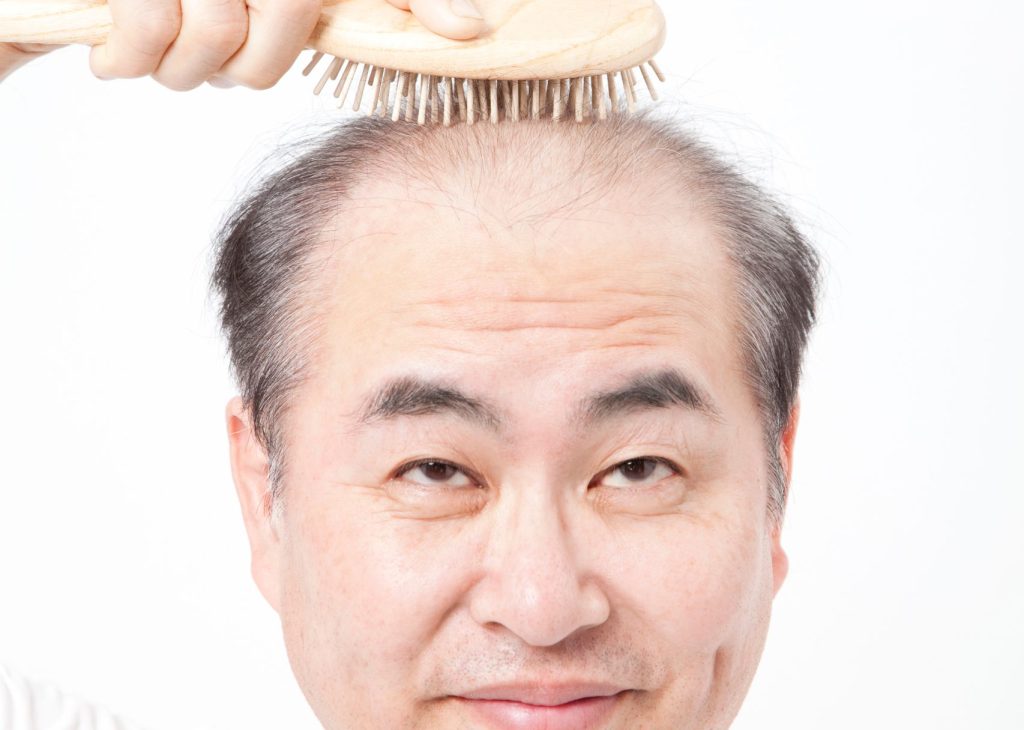
Tap the scalp with the brush thinning hair men
Post-operative care
scalp care
Post-operative scalp care is important to promote the establishment and healthy growth of transplanted hair. Please note the following points:
How to wash your hair: For a few days after surgery, wash your hair according to your doctor’s instructions. At first, rinse it off with water, then gradually wash it gently using a mild shampoo. When wiping off the water, tap it with a paper towel to drain the water. It is best to avoid applying water pressure directly to the hair transplant area. The first week is important.
Avoid touching: Be careful not to rub or scratch the transplanted area. The first few weeks after surgery are especially delicate.
Points to note in daily life
To speed up your post-surgery recovery, keep the following in mind in your daily life:
Rest: It is important to get enough rest and relax your body after surgery. Avoid excessive exercise and stress.
Sleeping position: Sleeping with your head elevated can help reduce swelling. Try to sleep in this position for a few days. We recommend sleeping with a travel pillow wrapped around your neck.
Although hair removal may cause bleeding, it is mild and there is no need to cover it with gauze.
You can start exercising easily after about two weeks. The pool will be closed for one month. Because it contains chlorine, it will damage the hair transplant area.
Quit smoking and limit alcohol
Smoking and excessive alcohol consumption can cause poor blood circulation and have a negative impact on the establishment of transplanted hair. To speed up your post-surgery recovery, keep the following in mind:
Quit smoking: Smoking constricts blood vessels and impairs blood flow, which inhibits the growth of transplanted hair. It is advisable to quit smoking as much as possible.
Limit alcohol consumption: Moderate drinking is fine, but avoid excessive alcohol intake. It is recommended to avoid alcohol, especially for the first few days after surgery.
regular follow-up
It is important to see your doctor regularly to check on your post-surgery progress and check for any problems. Follow up by keeping the following in mind:
Medical examination schedule: Follow your doctor’s instructions for regular medical examinations. Usually, you will be examined 1 week, 1 month, 3 months, 6 months, and 1 year after your surgery.
Early detection of problems: If you notice any abnormalities with your scalp or transplanted hair, consult your doctor as soon as possible and take appropriate measures.
summary
Hair transplant surgery is an effective treatment for men suffering from hair loss, but it is important to manage the pain associated with the surgery and take appropriate care after the surgery. Pain during surgery is minimized with local anesthesia, and postoperative pain can be managed with analgesics and cold therapy. By taking care of your scalp, taking precautions in your daily life, and receiving regular follow-up from your doctor, you will promote the establishment and healthy growth of transplanted hair. Maintain a healthy lifestyle after surgery to get the most out of your surgery.
Hiro Clinic Hair Transplant
At Hiro Clinic, we recommend Natural Pro FUE treatment, which treats hairless areas where oral treatment or injection therapy is not effective, and leaves almost no visible scars. By harvesting hair roots from the back of the head and shaving the area, post-surgery management is easier, and only the required number is transplanted with a natural-looking finish. It can be performed as a same-day surgery using local anesthesia, provides gradual hair growth at an affordable price, and can be safely performed in Japan.